
When Biochemistry Meets Geometry: Spatial and Biochemical Determinants of Rab5 Activation
MoPS talk
Date
Thursday, February 19, 2026 13:00 - 14:00
Speaker
Ivana Matijevic (Loose Group )
Location
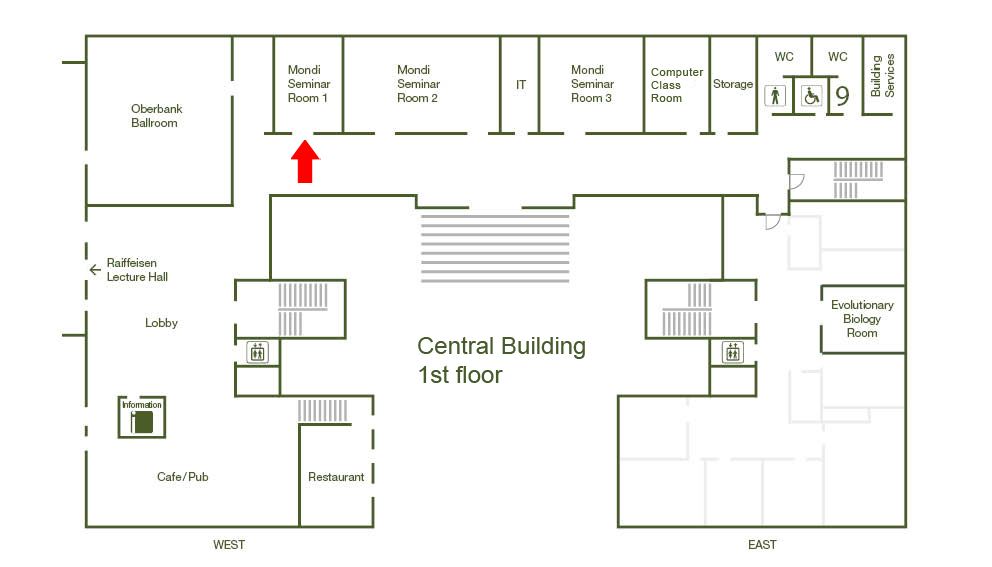
Central Bldg / O1 / Mondi 2a&b
Series
Seminar/Talk
Contact
Understanding what sets the timing of cellular activation remains a central challenge in dynamic signaling systems. Rab5 activation on membranes emerges from a feedback-driven, threshold-controlled process shaped by catalytic input, substrate availability, and spatial confinement. Here, we probe how spatial scale interacts with inhibitory (GDI) and activating mechanisms (RR) to shape temporal responses. By systematically varying these parameters, we aim to better understand their roles and uncover how Rab5 activation emerges from coupled spatial and biochemical input.