
Institute Colloquium: Geometry of morphogenesis
Date
Monday, October 6, 2014 16:30 - 17:30
Speaker
Przemyslaw Prusinkiewicz (University of Calgary)
Location
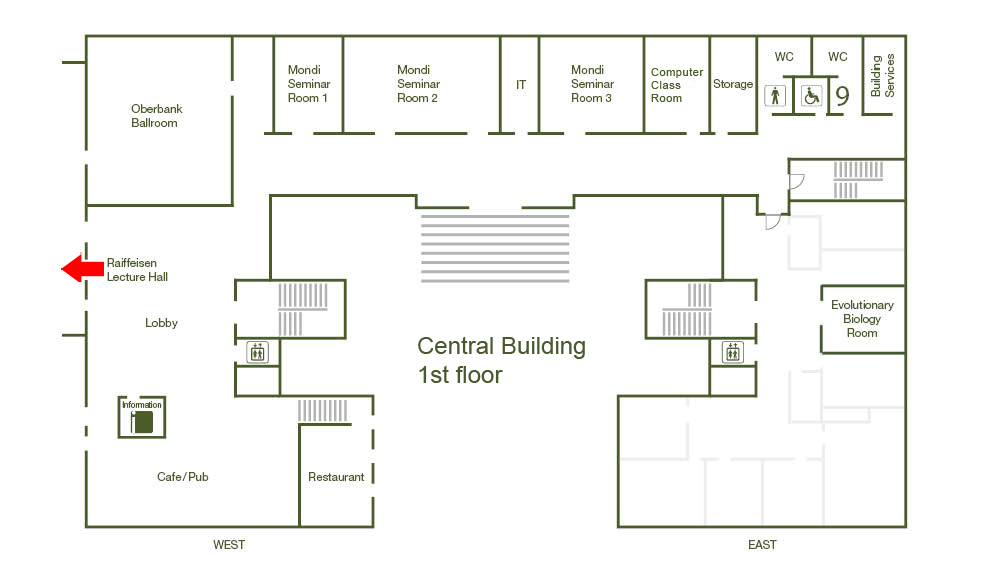
Raiffeisen Lecture Hall, Central Building
Series
Colloquium
Tags
Institute Colloquium
Contact
Url
In the landmark 1952 paper, The chemical basis of morphogenesis, Alan Turing proposed reactions between diffusing substances as a general model for biological pattern formation. In the development of his model, Turing abstracted from the growth of the tissues under consideration. Contrary to this assumption, however, feedback between patterning and growth is essential for numerous morphogenetic processes in nature. This feedback can be formulated in geometric terms. Biochemical and biomechanical factors are then viewed as a lower level of abstraction, from which the geometric properties of the patterning processes emerge. The geometric viewpoint highlights similarities between diverse morphogenetic processes in plants, including the formation of phyllotactic patterns (the arrangement of plant organs), the development of leaves, and the development of inflorescences (flower clusters). The presentation will be illustrated using interactive computational models and simulations that expose the conceptual beauty and simplicity of several algorithms of plant development.