
No Margin for Error: Navigating Academia Without a Financial Safety Net
The EDI Office is please to announce this year’s “Diversity in Science” talk and reception by Dr. Güneş Taylor.
An academic career is a series of watershed transitions: undergraduate, PhD, postdoc, independent group leader… Reaching each new rung of the ladder is an achievement, but the next is never guaranteed. With every transition comes a new period of uncertainty and a new set of personal and financial risks. Yet the consequences of that uncertainty are not the same for everyone. Without family wealth or a financial safety net, there is far less room for things to go wrong. Here I will consider financial security as an often-overlooked dimension of diversity in science, and ask what we miss when we talk about equal opportunity without considering who can afford the uncertainty that an academic career demands.
Drawing on my own experience as a political refugee and a foreign scientist in the UK, I will explore how financial security intersects with gender, migration, and belonging in shaping a career in science. In particular, I will reflect on the cumulative impact of navigating academia without a financial buffer, from the career choices we make to the lives and families we hope to build.
Program:
- 15.30 Opening Words
- 15.40 - 16.30 DiS Talk “No Margin for Error: Navigating Academia Without a Financial Safety Net“
- 16.30 Open Q&A session
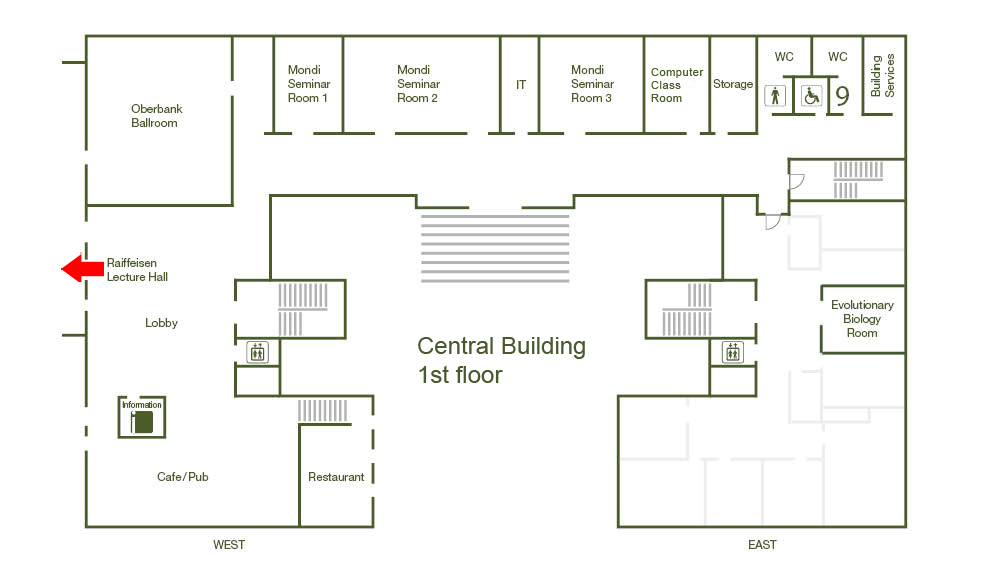
- 17.00 Reception Foyer Raiffeisen Lecture Hall
Notice: Don’t miss Günes Taylor’s scientific seminar “Specification and Activation of Pregranulosa Cells within the Amniote Ovary“, Friday 20 November, 10.00 a.m. Mondi 2 (Central Building, O1).
About Dr. Taylor
Dr Günes Taylor is a Chancellor's Fellow and Principal Investigator in the Centre of Reproductive Health at the University of Edinburgh. As a molecular biologist she uses many cutting-edge technologies to understand how reproductive systems are built. Her research program seeks to unravel details of ovarian function, with the ultimate hope of developing solutions for women’s health and fertility. She also is a trustee of The Genetics Society, previously being the Magazine Editor and recently being appointed the VP of Membership.
Short bio:
- Chancellor's Fellow / Principal Investigator in Centre of Reproductive Health at the University of Edinburgh
- Postdoctoral Fellow in the Lovell-Badge Lab at the Francis Crick Institute in London
- DPhil in the Sauka-Spengler Lab at the University of Oxford
- MSci in Human Genetics at the University of Nottingham