
Cellular computations and decision-making by dynamic biomolecular ensembles
SLAM Seminar
Date
Thursday, September 17, 2026 11:00 - 12:00
Speaker
Krishna Shrinivas (Northwestern University)
Location
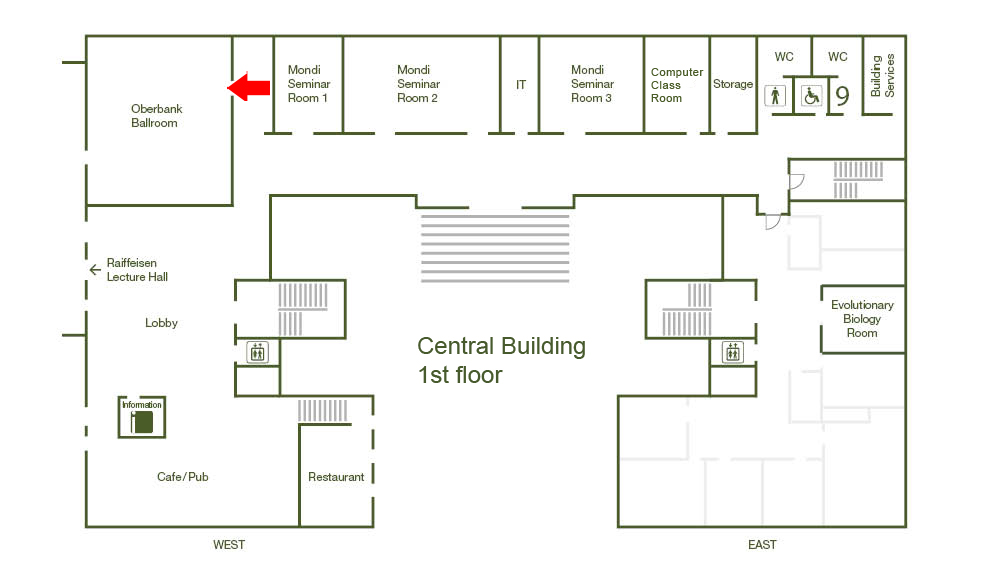
Ballroom / Central Bldg / O1
Series
Seminar/Talk
Tags
SLAM Seminar
Host
Carl Goodrich
Contact
Living cells perform remarkable functions that are powered through biomolecular networks that interact and react in crowded cellular environments. Many biomolecules are highly dynamic, fluctuating among diverse conformational ensembles and spatially self-organizing through phase transitions. How can cells harness the physics of these dynamic assemblies to sense, compute, and respond to their environment? Using design as a lens, I will explore how physical principles connect molecular-scale dynamics and self-organization to enable and constrain biomolecular information processing.