
Institute Colloquium: Cosmic carbon chemistry and the search for life in the universe
Date
Monday, November 17, 2014 16:30 - 17:30
Speaker
Pascale Ehrenfreund (Austrian Science Fund)
Location
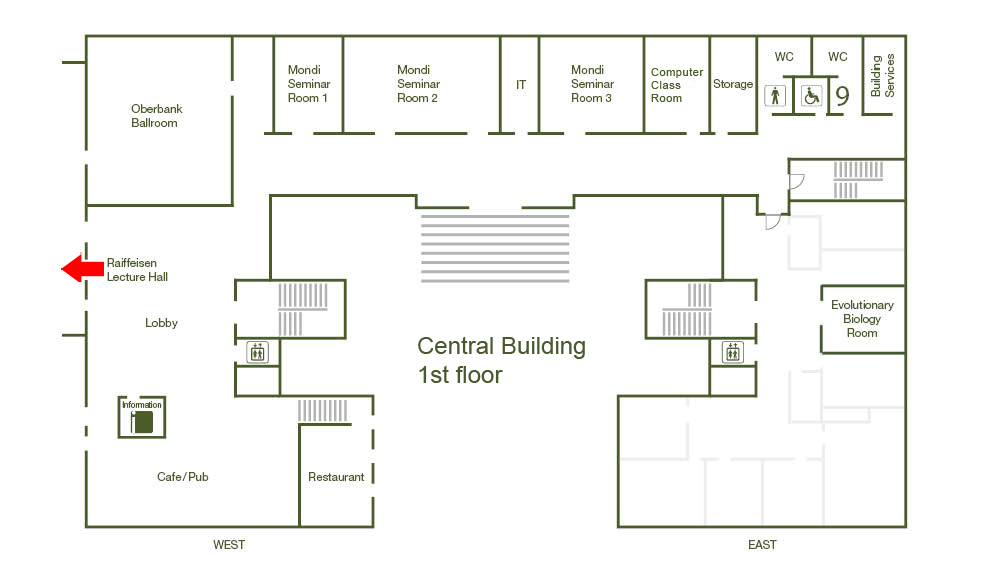
Raiffeisen Lecture Hall, Central Building
Series
Colloquium
Tags
Institute Colloquium
Contact
Astronomical observations have shown that carbonaceous compounds in the gas and solid state, refractory and icy are ubiquitous in our and distant galaxies. Interstellar molecular clouds and circumstellar envelopes are factories of complex molecular synthesis. Also a surprisingly large number of molecules that are used in contemporary biochemistry on Earth are found in our solar system environment. Small solar system bodies hold clues to processes that formed our solar system and probably contributed most of the carbonaceous compounds during the heavy bombardment phase ~3.9 billion years ago to the young planets, a process which may have jump-started lifes origin on Earth. A large amount of organic molecules has been identified in cometary comae and the presence of organic material in asteroids is inferred from reflectance spectra. Laboratory measurements of the carbon fraction of carbonaceous meteorites revealed extraterrestrial organic compounds including amino acids, N-heterocycles, carboxylic acids as well as aliphatic and aromatic hydrocarbons. In-depth understanding of the organic reservoir in different space environments as well as data on the stability of organic and prebiotic material in solar system environments are vital to assess and quantify the extraterrestrial contribution of prebiotic sources available to the young Earth. Apart from lifes origin on Earth the interdisciplinary science discipline Astrobiology investigates the search for life in our solar system and beyond. A fleet of robotic space missions target planets, moons and small bodies to reveal clues on the origin of our solar system and life beyond Earth. Extensive science activities in support of Mars exploration are performed worldwide in the laboratory, in the field and through simulation studies. This lecture will compile our current understanding concerning the origin of life on Earth, the possibility of life elsewhere, and highlight current and future space endeavors pursuing astrobiological goals.