
Institute Colloquium: Function and specific development of brain synapses
Date
Monday, November 3, 2014 16:30 - 17:30
Speaker
Ralf Schneggenburger (EPFL Lausanne)
Location
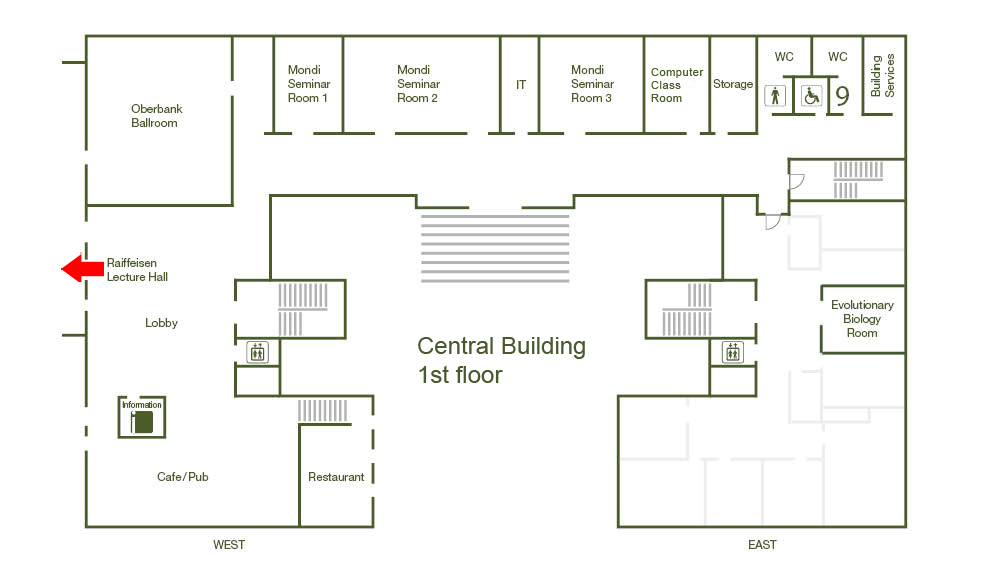
Raiffeisen Lecture Hall, Central Building
Series
Colloquium
Tags
Institute Colloquium
Contact
Url
Nerve cells communicate with each other at synapses via the process of chemical synaptic transmission. The exact synaptic connectivity in the emerging neuronal networks, and the strength of synaptic transmission between nerve cells determines information flow, and ultimately, higher brain function. The specific properties of synapses are acquired during brain development, but the underlying mechanisms are only beginning to be addressed. Our lab uses a combination of mouse genetics, behavioral assays and ex-vivo slice electrophysiology, to investigate these mechanisms at selected excitatory and inhibitory synapses of the mouse auditory system. Using the calyx of Held, an unusually large excitatory synapse in the auditory brainstem, we could show that bone morphogenetic protein (BMP) signaling contributes to the development of large synapse size and specific innervation pattern of the postsynaptic neurons (Xiao et al. 2013). Second, we investigate how use-dependent synaptic plasticity at inhibitory synapses might contribute to a plastic period during the development of the auditory cortex. Preliminary data show an unexpectedly large plasticity at inhibitory, GABAergic output synapses formed by Parvalbumin-expressing cortical interneurons, and a role of BMP signaling in controlling this plasticity. Together, our work investigates mechanisms at the boundary between genetically encoded regulatory factors, and use-dependent synaptic plasticity which shape the specific synaptic connectivity patterns in the mammalian brain.